
 Back to blog

On average, we look at our phones around 80 to 100 times a day. This number can be even higher among younger users. This includes activities like checking messages, social media, and notifications. The frequency can vary based on individual habits, work requirements, and personal preferences.
It would be silly to not use this statistic to your advantage as a business. If you want your brand to be noticed, you need to be visible on the phones of your customers. How? Well, there’s a myriad of channels to choose from – SMS, WhatsApp, Facebook Messenger, Instagram Messages, Viber, push notifications, native apps, the list goes on and on.
So, just pick a channel and be done with it? No! Not if you want to truly make an impact with your communication strategy. Offering multiple channels to customers is becoming the norm, and with good reason. Consumers who interact with a company through various “touchpoints” or channels—such as social media, a company’s website, or a physical store—are more likely to convert and become repeat customers.
Customers should be able to easily switch between different channels, whether it’s email, the company website, calling customer service, or reaching out via chat, without needing to "Google" the new contact method.
Here’s where the channel-terminology comes into play. Let’s explain what’s what first.
Single Channel: Basic Customer Interaction
To start, there’s single channel. A single channel business offers customer contact through only one channel – which can be a physical shop, a website, or another channel. Customers generally have no choice in which channel it is, because the business determines where they offer their services.
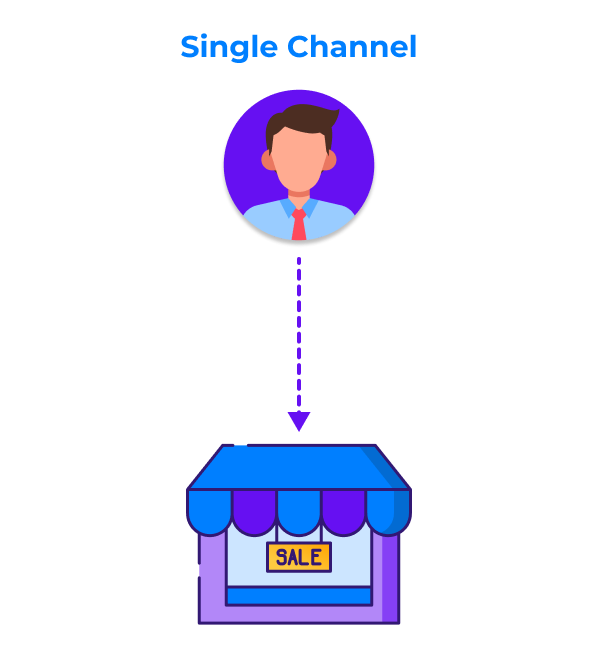
For example, a business only offering their services via a physical store. No webshop, no other contact information available.
Multichannel: Separate Experiences via Multiple Channels
Multichannel businesses offer their services via multiple channels. For example, a webshop and a physical store. Or via a webshop and Facebook Messenger. Or via WhatsApp, Instagram and SMS. Any combination of channels is possible, and there’s no limit on the number of channels either. Typical for multichannel businesses is that all channels operate individually – meaning that customers on WhatsApp experience a very different customer journey than customers in the (web)shop. Often, the audiences of the channels also don’t overlap.
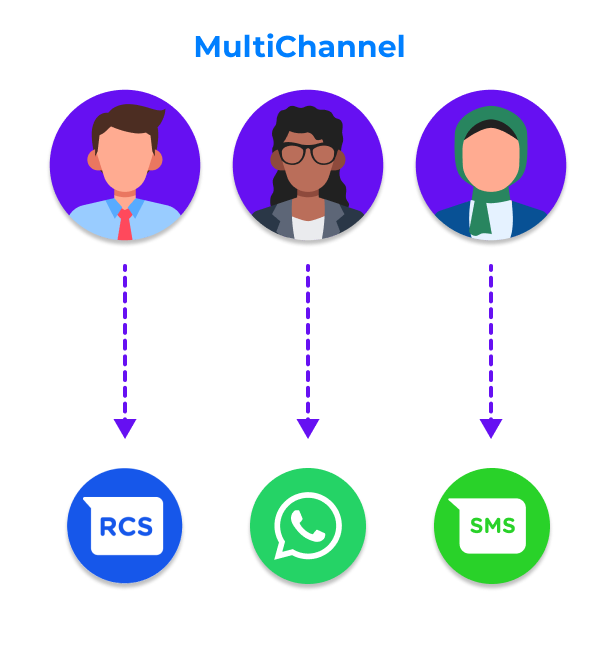
For example, a business has customer engagement on SMS and via WhatsApp. The teams operating both channels don’t interact with each other and what happens on one channel is a mystery to the other.
Cross-Channel: Product-Focused Engagement Over Multiple Channels
Cross-channel means using multiple channels to engage customers, with an emphasis on how those channels interact. Customers will be able to choose their preferred channels, and the channels are connected, but the strategy is still very product-focused. It still lacks a fully seamless experience, where the transitions between channels are completely fluid.
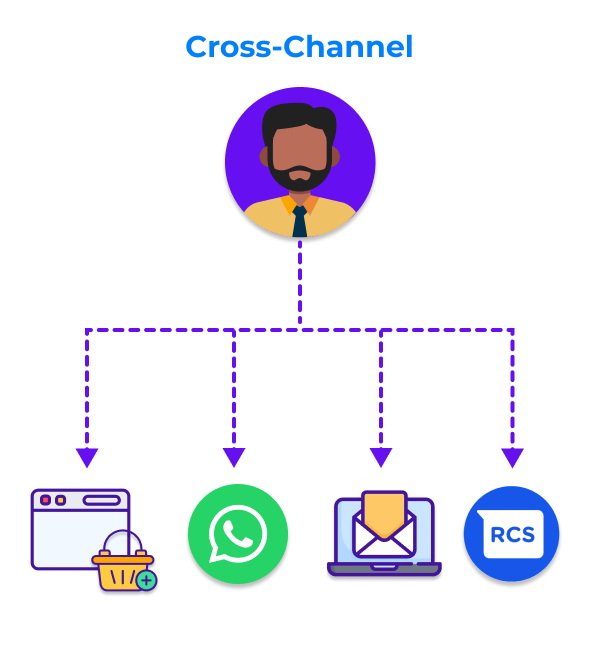
For example, a customer might receive a promotional email, and then see related content on social channels or on the website.
Omnichannel: Unified Customer-Focused Engagement Over Multiple Channels
Like multichannel and cross-channel, omnichannel also involves multiple channels for customer engagement. However, omnichannel integrates these channels to create a unified, customer-centric experience. All contact channels are connected, providing a completely seamless customer experience—regardless of whether the customer is shopping online from a mobile device, via Facebook, a laptop, or in a physical store.
This also means that customers experience a brand, not a channel within the brand. All channels are aligned to the customer’s needs, and they can decide which channel suits their needs best. Omnichannel also allows for better tracking and attribution of customer interactions across various touchpoints, because you can keep tabs on customers everywhere they interact with your business.
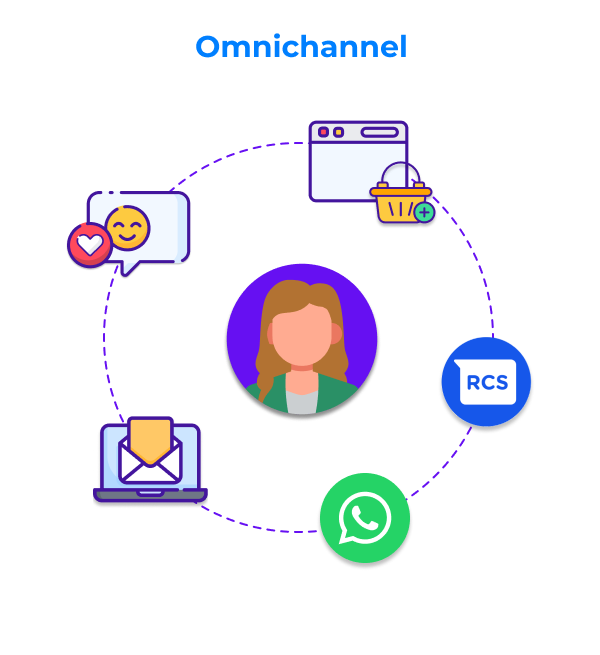
For example, a customer browses a webshop and adds items to the cart. Later, the customer will receive a push notification from the business’ app that offers them a discount on those items. Rather than ordering online though, the customer decides to head to the physical store. No problem! Because they were able to check online if the item was still in stock. After the purchase, the customer receives a thank-you message on WhatsApp, with additional information on their purchase and suggestions for complementary services.
What Strategy is Best for Your Business?
These days, it is all about your presence on different communication channels. All strategies above let customers interact with your brand – with a difference in the number of channels and the level of integration and seamless engagement. So, what is best for your business?
Let’s take single channel out of the mix for now. It may work perfectly for small businesses, but if you’re reading this blog, chances are that you’re looking to up your marketing game with a strong(er) customer engagement strategy.
The effectiveness of omnichannel, multichannel, or cross-channel engagement largely depends on the specific goals of a business and how well each strategy is executed. However, research generally indicates that omnichannel marketing tends to yield the best results for several reasons:
Seamless Experience: Omnichannel customer engagement provides a cohesive and seamless customer experience, allowing customers to transition smoothly between channels. This can lead to higher customer satisfaction and loyalty.
Higher Engagement: Brands that effectively implement omnichannel strategies often see higher engagement rates, as customers feel more connected and supported throughout their journey.
Increased Conversions: Customers who engage with a brand through multiple channels are more likely to convert into paying customers. Omnichannel strategies leverage this by personalizing interactions based on past behaviors.
Better Customer Insights: Omnichannel marketing typically involves integrated data analytics, allowing businesses to gain a comprehensive view of customer behavior and preferences, leading to more effective targeting and personalization.
While multichannel and cross-channel engagement can also be effective, they may not deliver the same seamless customer experience that omnichannel strategies provide. However, omnichannel engagement is not achieved within a day. And that’s not a bad thing. You can start with a multichannel strategy and start expanding on the customer experience to cross-channel and eventually omnichannel engagement.
Having market-leading software to support the effective implementation of an omnichannel strategy is key to success. Platforms like CM.com integrate channels like RCS, WhatsApp, and email, allowing for a seamless experience across all customer touchpoints.
Ultimately, the best approach depends on understanding your target audience, their preferences, and how they interact with your brand across different channels. The opportunities are endless. Are you ready to start?



 +45 31519312


