

A customer sees your brand’s festive offer on WhatsApp. They like the product but have some queries about delivery. If they don’t receive answers quickly, they’ll move to a competitor. That is where the WhatsApp marketing strategy for Indian businesses matters.
WhatsApp is a preferred communication channel for Indian consumers, but several brands still use it for one-way promotional messages. It's time you start utilizing the benefits of the WhatsApp broadcast feature through a suitable, customized WhatsApp marketing software. This makes it easier to reach out to and engage millions of internet users across India.
For marketing managers, e-commerce teams, BFSI brands, and customer experience leaders, the opportunity is too big to overlook. By using a conversational AI chatbot equipped with WhatsApp business solutions, they can enhance conversational commerce growth like never before. The agentic AI-enabled WhatsApp marketing solution by CM.com India gives them precisely that advantage.
What Does WhatsApp Marketing Mean for Businesses Today?
WhatsApp marketing is no longer limited to sending offers to a saved list of phone numbers. Indian brands now use WhatsApp message marketing to send product updates, cart reminders, payment alerts, service requests, and booking confirmations. They also use it for post-purchase support.
This is crucial because tech-savvy Indian consumers now expect brands to offer them shopping and related services on convenient digital channels. According to Meta's State of Business Messaging report, 73.3% of consumers prefer messaging when communicating with businesses. This trend is also reflected in India's growing preference for digital and conversational customer interactions.
This makes WhatsApp business more than a campaign channel. With the right WhatsApp marketing strategy, it can improve message open rates, faster replies, and stronger customer engagement.
Why Broadcasts Alone Are No Longer Enough?
A WhatsApp broadcast helps a brand send the same update to several customers simultaneously. It is ideal for booking reminders, festive offers, product launches, sale alerts, and similar promotional messages. SMBs can use it to engage existing and opted-in customers.
But broadcasts have limits. For the WhatsApp Business App, customers generally need to have saved your number to receive broadcast messages. Besides, it’s largely a one-way communication. It can’t, for example, answer a delivery question, recommend the right product, or recover a cart.
That gap is crucial for brands striving to reach maximum target buyers easily. So, Indian brands must focus on using the right WhatsApp message marketing strategy that turns conversations into conversions consistently.
WhatsApp Business App vs WhatsApp Business API
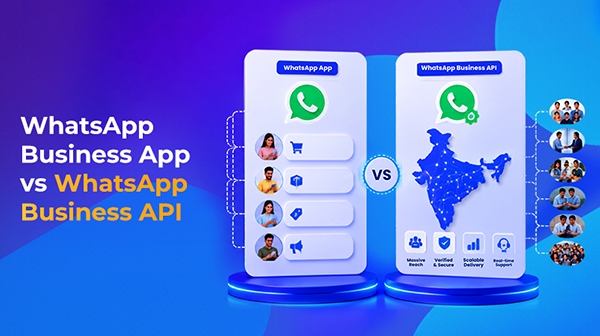
The WhatsApp Business App suits Indian SMBs handling a limited number of customers. They generally use it to manage a basic WhatsApp account, reply quickly, label chats, showcase products, and send broadcast updates. Meta Verified businesses can link up to 10 devices and agents, enabling teams to handle more conversations.
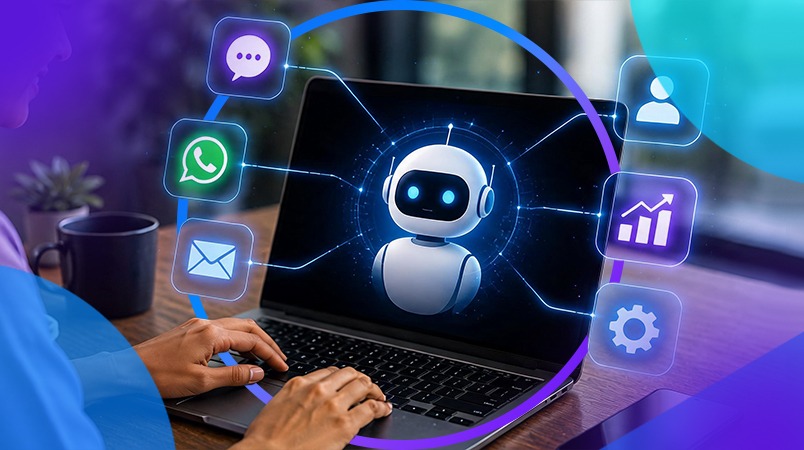
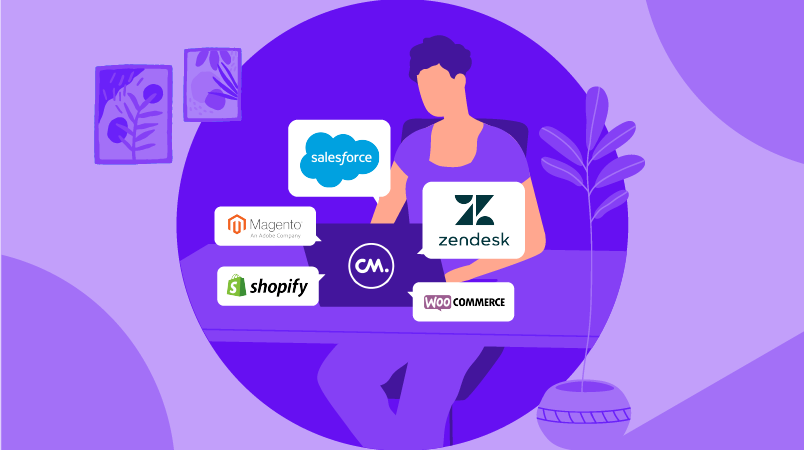
However, enterprise WhatsApp marketing requires more. The WhatsApp Business API is scalable, customizable, and has enterprise-grade business messaging features. With it, brands can run automated campaigns, connect WhatsApp with CRM systems, manage multi-agent workflows, and track customer journeys. It also supports conversational AI chatbot integration.
For brands handling high-volume customer engagement, the API, equipped with automation features, turns from a messaging platform into an integrated customer communication channel.
How to Build a WhatsApp Marketing Strategy for Indian Businesses?
A strong WhatsApp marketing strategy for Indian businesses starts with clarity, not volume.
First, define the specific goal of your WhatsApp marketing campaign - lead generation, cart recovery, repeat purchase, or payment reminder? Each objective needs a different message flow and triggers different automation rules. So, set the goal beforehand.
Next, set up a compliant, opt-in audience segregated by lifecycle stage, order history, location, and engagement pattern. A first-time buyer needs a different message than a repeat customer leaving a premium cart. Blanket messaging to a mixed audience underperforms.
Then, create the conversation flow, not only the message. Analyze how a user is likely to respond, what happens if they don't, and when to rope in a live agent. Platforms like CM.com India's WhatsApp Business API solution let you automate these flows easily.
Lastly, look beyond delivery rates. The key tracking metrics are conversion rate by message type, opt-out rate by audience type, response time, and revenue per conversation. These insights reflect not just the number of users receiving the message, but also the strategy's efficacy.
From WhatsApp Broadcast to Conversational Commerce
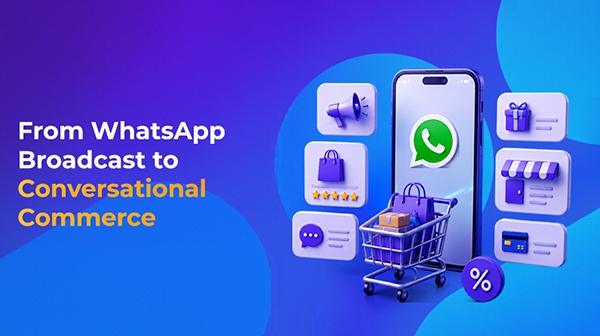
A broadcast sends information, while conversational commerce makes customers act on it.
We’ll look into some industry use cases:
Indian e-commerce and retail brands can use WhatsApp Business API solutions for cart recovery, order updates, product discovery, loyalty campaigns, and repeat purchases.
BFSI organizations can use it for payment reminders, KYC updates, policy alerts, and service escalation.
EdTech brands can use it for enrollment reminders, course renewal updates, and fee reminders.
The shift is visible. Indian consumers want real-time answers, useful choices, and a smoother buying experience with the familiarity of WhatsApp. CM.com India’s Agentic AI platform, Halo, keeps the conversation going across WhatsApp, email, and voice.
Choosing the Right WhatsApp Customer Engagement Platform
For growing Indian brands and enterprises, WhatsApp marketing should not run in isolation. The right WhatsApp marketing platform must sync seamlessly with customer data, CRM tools, and other channels like email and SMS.
Brands must evaluate aspects like conversational AI chatbot integration, multilingual support, message template management, broad data safety protocol support, and omnichannel reach.
CM.com brings a powerful, scalable WhatsApp message marketing solution, aided by its agentic AI module, Halo.
Conclusion
Success in WhatsApp marketing in India does not depend on the bulk, but on creating useful customer conversations.
Broadcasts still have a role, but growing brands need more than one-way messaging. With a customized WhatsApp Business API solution and in-built conversational AI chatbot, they can offer customers a consistent omnichannel experience. And they can do all that with CM.com’s AI agentic module- Halo.
FAQs
1. How can Indian brands use WhatsApp marketing to improve post-purchase support?
Apart from promotional campaigns, WhatsApp marketing can handle order updates, return requests, and service escalations. It keeps your customers engaged after the purchase and reduces support load. The satisfaction and repeat order prospects get a boost.
2. How to make WhatsApp marketing compliant with the latest data privacy norms?
Brands using WhatsApp Business API must focus on opt-ins, honor opt-outs, and adhere to the latest data handling norms. Choosing a platform that complies with GDPR, DPDP, and broader data safety norms reduces risk and builds customer trust.
3. How does multilingual support help WhatsApp marketing in India?
India's linguistic diversity means a single-language WhatsApp campaign can’t reach a large number of target buyers. WhatsApp marketing platforms with strong multilingual support enable brands to interact in regional languages. This enhances relatability and open rates.
4. How much does WhatsApp Business API cost in India?
WhatsApp Business API pricing in India follows Meta's conversation-based model. The charges apply per 24-hour conversation window. Costs vary by conversation category — marketing, utility, authentication, or service. Partnering with a Meta-approved BSP like CM.com India gives brands access to transparent pricing.
5. How do conversational AI and WhatsApp chatbots support marketing?
Conversational AI chatbots on the WhatsApp API manage product queries, recommend options, assist in abandoned cart recovery, and assist users in real time. Unlike static broadcasts, they respond according to user intent. This makes WhatsApp a one-way promotional channel into an interactive sales and support platform.