

Growing Indian brands often feel unsure about choosing the right platforms for customer engagement. When you compare Facebook Messenger vs RCS vs WhatsApp, WhatsApp’s massive and growing user base gives it a clear edge. However, Messenger’s social ecosystem reach is huge, and RCS’s media-rich, native messaging without app install makes it a solid contender.
In this blog, we will learn which digital communication platform is the most viable one for Indian brands and why using CM India’s Business Communication Platform makes sense for them.
Instant Messaging Platforms are Ideal for Improving Business Communication
 Indian consumers today want brands to offer instant responses, personalized shopping journeys, and real-time engagement. Older-era messaging platforms can hardly meet such changing user needs.
Agentic AI-powered WhatsApp Business API solutions help businesses manage this market shift rather effectively. They bring in several advanced features, including bulk messaging, chatbot, CRM sync, rich media support, and user action-based automation. This versatility makes the platforms ideal for brands offering conversational commerce, strong support, and enhanced customer experience.
Messenger - Best for Social Engagement
India is Facebook's largest market, with over 448 million monthly active users, which gives Messenger an enormous reach. However, for more direct and high-intent messaging, WhatsApp may be a better choice.
For Indian brands, Messenger works well for running social campaigns, lead generation, and nurturing audience relationships. However, to experience full conversational commerce, WhatsApp Business API still gets an edge.
RCS Messaging- Ideal for Enterprise Notifications & Rich Messaging
Rich Communication Services (RCS) adds elements like rich cards, images, click-to-action buttons, and interactive journeys to regular messaging. The good thing is you don’t need any extra app installation. Data shows RCS enjoys a message read rate of over 20% for email, and RCS campaigns get 15–30% CTR, almost on par with WhatsApp.
Indian brands in banking, retail, and telecom sectors are increasingly using it for enterprise alerts, promotional campaigns, and interactive customer notifications.
WhatsApp vs Messenger vs RCS for Business Communication
Before choosing the right platform, brands must compare the top contenders on key parameters:
WhatsApp: Supports WhatsApp Business API, chatbots, CRM integration, automated workflows, rich media, and multilingual communication. It is strong for two-way customer conversations, product discovery, cart recovery, order updates, support, and conversational commerce.
Messenger: Supports bot-led conversations and works well within the Facebook ecosystem. It helps brands run social campaigns, capture leads, and nurture customers already engaged on Facebook. Its commerce capability is useful, but it is generally more campaign-led than transaction-led.
RCS: Supports rich cards, images, CTA buttons, branded messages, and interactive notifications without a separate app download. It is useful for enterprise alerts, promotional campaigns, loyalty updates, and rich notifications. Its commerce capability is still modest compared with WhatsApp.
The Role of AI in Business Communication
The incorporation of advanced AI tech, especially conversational AI, is transforming business communication in India. Customized WhatsApp Business API solutions incorporate real-time replies, more personalized interactions, and automated workflows. Advanced AI chatbots in these platforms help reduce response times and offer a consistent customer experience.
Using AI-assisted WhatsApp business solutions can benefit Indian brands from numerous sectors like e-commerce, BFSI, edtech, and travel.
Industry Use Cases in India
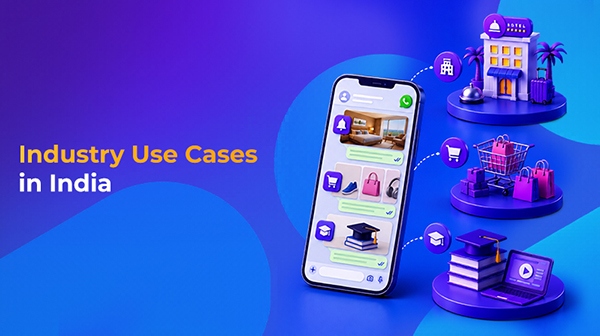
Let’s see how different sectors in India gain from RCS and WhatsApp-based Business communication platforms:
Hospitality sector brands use WhatsApp Business API to send booking confirmations, check-in notifications, and real-time user support. RCS is good for pre-arrival notifications and loyalty updates, and using branded rich media.
E-commerce brands use WhatsApp Business API for cart recovery, sending order updates, and post-order engagement. RCS works well for rich promotional campaigns and product carousels.
Edtech platforms use customized WhatsApp solutions to send payment notifications, course updates, and grievance resolution. RCS is ideal for batch notifications, such as exam schedules.
Brands in these domains must choose the right platform for the right needs to get measurable results.
Choosing the right messaging platform is just the beginning. An omnichannel strategy helps businesses connect WhatsApp, Messenger, RCS, SMS, and more to create seamless customer experiences.
Read more: Why Is Omnichannel Marketing Important for Retail & Ecommerce?
Conclusion
Choose the right messaging platform for sustained business growth, especially in an increasingly tech-savvy, competitive market like India. For running social campaigns and lead nurturing, Messenger offers strong engagement, while RCS provides a native, immersive experience for rich, interactive messaging. WhatsApp appeals to a wider range of users across different sectors.
Brands seeking real-time engagement, automated workflows, and better conversations should choose Halo, the agentic-AI-powered Business Communication Platform in India by CM.com.
FAQs
1. Can WhatsApp, Messenger, and RCS be used together, or do brands have to pick one?
These communication platforms work best when you choose them for specific needs. Indian brands should use WhatsApp for high-intent, two-way customer conversations, and keep RCS for rich broadcast notifications and enterprise alerts. Messenger is good for social campaign-based lead generation. The key is using each platform for a specific stage of the customer journey. Do not think of them as substitutes for one another.
2. How do I know which platform is right for my business size?
WhatsApp Business API solutions are for brands that want automation, CRM tool integration, and solid customer engagement. RCS works for enterprise-level players who frequently deal with large-scale notification campaigns. Messenger is for brands that are already running paid social campaigns on Facebook. Smaller businesses can start with WhatsApp Business API and add RCS or Messenger as volumes grow.
3. Is RCS a serious long-term competitor to WhatsApp in India?
RCS is growing quickly in India, but the thing is, it serves a different purpose than WhatsApp. It is great for notification-style, rich-media messaging. Users do not need any app installation, either. WhatsApp offers two-way real-time engagement, conversational commerce, and strong customer support. Rather than competing, the two platforms are increasingly complementary in a well-structured digital communication strategy.
4. What data privacy and compliance laws apply to Indian brands using these platforms?
WhatsApp Business API solutions must adhere to Meta's data privacy terms and India's DPDPA law 2023. Both these norms need brands to get end-user consent. Since RCS runs through Indian telecom companies, it requires operator-level clearance. Messenger comes under Meta's global data policies. Regardless of the chosen platform, indian brands must ensure opt-in consent, data localization compliance, and clear opt-out options.
5. Which platform is best for conversational commerce?
For conversational commerce in India, WhatsApp Business API solutions work well. Agentic AI-powered platforms like Halo enable different brands to guide customers from discovery to purchase stages, all within the chat UI. Its advanced automation and deep personalization, along with multilingual support, enhance the overall shopping journey.