


Imagine a user checking out your e-commerce site, adds a designer dress to the cart, moves to the checkout section, and then leaves all of a sudden. Sounds quite familiar? Thousands of Indian brands cope with high e-commerce cart abandonment rates. The main reasons include additional charges, complex steps, or slow responses.
For Indian e-commerce and D2C brands, it’s a daily revenue loss. Each abandoned cart is a lost conversion opportunity, lost engagement, and it increases the customer acquisition cost, too. To re-engage such buyers, using channels like email and plain SMS is not very effective as they lack the immediacy and interactivity. That’s where RCS messaging for business steps in.
RCS business messaging solutions can be effective for Indian brands striving to reduce cart abandonment in India with RCS. Unlike regular SMS, RCS delivers interactive, branded, real-time messages with images, calls-to-action, and buttons, adding interactivity.
For Indian businesses keen on reducing cart abandonment rate and seeking a secure, flexible RCS messaging solution, CM.com India offers a robust, customizable, and secure RCS messaging platform.
What Is RCS Messaging?
Rich Communication Services (RCS) is the next-generation business messaging standard that makes plain SMS into a rich, interactive medium, right within the phone’s default messaging app. Created by the nonprofit GSMA, it has quickly become popular in the business scene.
Regular SMS has some limitations, like plain text format and a 160-character limit.
However, RCS messaging helps enhance content with high-quality images, videos, rich product cards, carousels, and buttons/CTAs. It supports significantly richer content than traditional SMS, including long-form text, images, videos, carousels, and action buttons. RCS also has a similar open rate as SMS, while faring better at CTR.
The inclusion of interactive elements makes RCS messages much more engaging, and that is why Indian brands resort to abandoned cart recovery through RCS messaging.
Understanding Cart Abandonment in E-Commerce and the Usefulness of RCS
Cart abandonment is a major problem affecting thousands of Indian brands across different niches. Baymard Institute data shows the average e-commerce cart abandonment rate is 70%. This can be daunting for Indian brands coping with stiff competition and choosier buyers.
Cart abandonment enhances the risk of revenue loss, and brands must take suitable measures for abandoned cart retargeting. RCS business messaging offers e-commerce brands an effective means to reach shoppers when intent is highest. Interactive reminders with product images, checkout links, offers, and buttons help re-engage buyers who left carts earlier.
How RCS Is Aiding Industries in Abandoned Cart Recovery?
Cart abandonment hurts different niches in India in unique ways, and RCS messaging brings targeted solutions:
E-commerce and D2C - Shoppers often leave carts for distractions or price sensitivity. RCS nudges with product images, one-tap checkout, and time-limited deals. Recovery and click-through rates are usually higher than SMS.
EdTech - Online course buyers tend to disengage before checkout. RCS adds course carousels, course fee reminders, and counselor connect buttons, increasing qualified lead conversions compared to SMS.
Travel - Abandoned bookings result in lost revenue for hotels and travel businesses. RCS messaging supports sending rich reminders with room pictures, pricing, and “Complete Booking” buttons. This helps improve buyer re-engagement and increases cart recovery prospects.
Since online shopping cart abandonment is caused mostly by friction and not lack of interest, contextual interactive messaging can help woo back customers and improve conversion rates.
How RCS Helps Indian Brands Reduce Cart Abandonment?
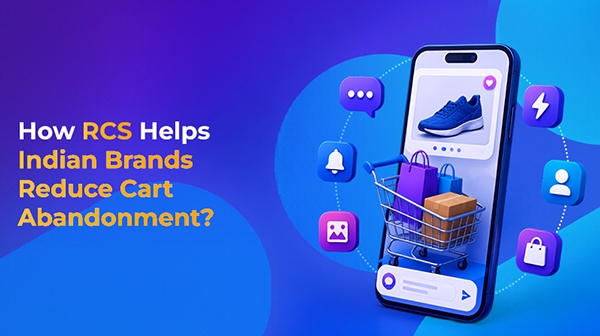
By using suitable RCS business messaging solutions, Indian brands can reduce the percentage of cart abandonment significantly. Here’s how RCS messaging helps businesses to lower the e-commerce cart abandonment rate:
Brands can send immediate notifications to shoppers leaving the checkout page, enhancing order completion prospects.
Inclusion of product images, carousels, and rich cards makes the abandoned item visually appealing.
Personalized recommendations work well for products or promotions, as well as for cross-selling.
Works in the shopper’s familiar messaging app, reducing app-switching and abandoned sessions.
Key Benefits of Using RCS for E-commerce Brands
With 85% of Indian households using smartphones and heavy adoption of messaging apps, e-commerce brands can tap into the opportunity by using RCS messaging.
RCS lets brands make the checkout process more interactive.
A single RCS message can be used to showcase discounts, suggest complementary products, and answer shipping queries.
Brands can send customized content based on browsing history, cart content value, or the buyer’s location.
They can use limited-time offers, countdowns, or loyalty points, reducing checkout hurdles.
RCS offers brands real-time engagement metrics, and they can optimize campaigns accordingly.
By using RCS tactfully, brands can noticeably reduce the e-commerce cart abandonment rate.
Choosing the Right RCS Platform
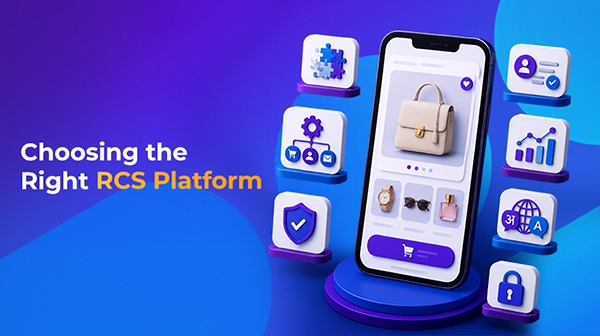
Selecting the right RCS messaging platform can make or break your e-commerce abandoned cart recovery strategy. To pick the right RCS platform, Indian brands should look for these factors:
Tight integration with the checkout system, CRM, or marketing automation tools.
Interactive messaging capabilities and support for rich cards, carousels, CTAs, etc.
Real-time reporting on read receipts, click-through rates, and conversions.
Scalable RCS platform with Multilingual support.
Robust security with TLS encryption, GDPR compliance, and broader security and governance standards.
RCS solutions with these features will be useful in motivating users to return to abandoned carts quickly.
Conclusion
Cart abandonment is a major problem for Indian e-commerce brands, but they can use RCS business messaging solutions to convert it into an opportunity. Interactive, real-time, and personalized RCS messages motivate buyers to complete orders.
Indian e-commerce brands seeking to lower cart abandonment rates should choose a safe, feature-rich, and customizable RCS service provider.
CM.com India’s RCS messaging platform combines RCS messaging capabilities with broader compliance, security, and governance standards, including support for GDPR and ISO 42001 for AI governance.
FAQs
1. Can e-commerce brands personalize abandoned cart messages using RCS messaging?
Yes. RCS messaging supports personalization using customer data, including browsing history, cart value, location, and previous orders. E-commerce brands can customize product images, promotions, and CTAs for every buyer. These help improve cart recovery messages. This helps improve the buyer re-engagement rate significantly.
2. How can verified RCS messages improve customer trust in e-commerce?
RCS messaging enables brands to send messages using a verified sender profile, replete with brand name, logo, and official color scheme. Shoppers are assured that the message is from a legitimate brand, reducing scam risks and making them more likely to click and complete a purchase.
3. Can RCS messaging support conversational commerce for e-commerce brands?
Yes. RCS offers support for two-way messaging. It lets customers ask queries, check products, use discount codes, or confirm orders, all inside the same message thread. This reduces the need to access the website separately, keeps the shopping journey intact, and reduces user drop-off.
4. What is the ideal time and frequency for sending RCS cart recovery messages?
The first message works best within 1 hour of abandonment, when buying intent is still high. A follow-up abandoned cart recovery message can go out within the 24-hour mark. Sending more than two to three messages in a short duration may cause opt-outs.
5. How does RCS handle fallback messaging when a user's device doesn't support it?
When a user's device or carrier lacks RCS messaging support, the message automatically becomes regular SMS. This ensures the message gets delivered without any manual intervention. For cart recovery campaigns, brands can set up fallback templates in advance so that the core message can reach the user.