


A customer receives a discount alert during a festive sale. The SMS is delivered instantly, but it looks plain, static, and generic. Without any images, interactivity, or clarity on the next step, users would often ignore it. In a mobile-first market like India, that gap can cost businesses dearly. That’s why Rich Communication Services (RCS) messaging is gaining traction among Indian brands of all types.
Your marketing and customer experience teams face the pressure to drive higher engagement across every message. With regular SMS, it is not possible to offer interactive, real-time experiences that customers have become accustomed to. RCS business messaging has the potential to easily engage and convert target customers.
Since RCS packs in rich media elements, without the complexity of additional apps, it reaches a wider range of users quickly. For growth-focused Indian brands, RCS messaging should be an integral part of customer communication strategies. CM.com India offers a flexible, feature-rich, and secure RCS Enterprise Messaging Platform that they can explore.
What is RCS Messaging and How Does It Differ from SMS?
RCS messaging is designed to transform the short message service experience into a richer, interactive format, without resorting to any external app or ecosystem. Unlike plain SMS, RCS allows businesses to send branded, media-rich content using cellular network infrastructure.
RCS messages support using pictures, videos, carousels, and action buttons. So, users can view and interact with the sender easily, inside the native app UI. It also supports features like read receipts, verified sender identity, and conversational flows. These help enhance customer engagement. While SMS is limited to information, RCS promotes interactions.
For Indian businesses comparing RCS vs SMS, the difference is largely functional. The rich, interactive media components in RCS messages help improve user engagement, response rates, and trust. The right RCS Business Messaging Platform can enhance sales and customer base.
Key Use Cases Across Customer Journeys
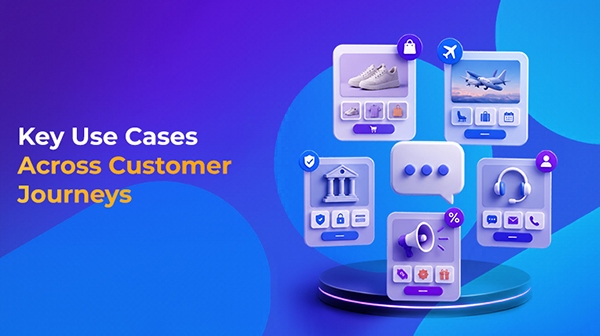 Indian brands from different sectors are embracing RCS messaging solutions to better align with customer journeys in an evolving digital ecosystem.
E-commerce brands use it for abandoned cart reminders with product images, pricing, and “Buy Now” buttons. This fetches better results than plain SMS messages.
Hospitality brands, including airlines and booking agencies, send real-time updates like boarding alerts, booking confirmations, and itinerary changes, reducing the need to check emails.
BFSI brands use RCS messaging to send OTP, transaction alerts, and fraud notifications with verified sender identity, crucial to enhance customer confidence in sensitive interactions.
So, RCS messaging in India brings businesses numerous means to offer guided troubleshooting, promotions, quick replies, and escalation to agents in real time.
RCS Business Messaging Impact – Improved Engagement, Conversion & Trust
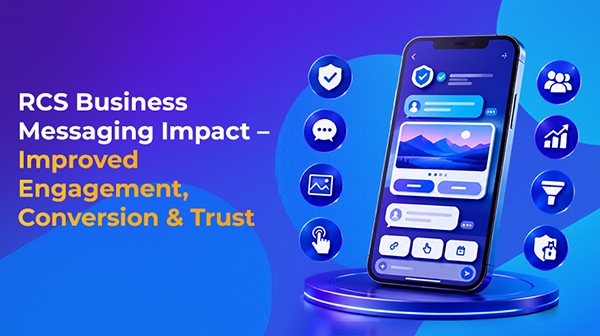 Switching to the RCS Business Messaging API brings Indian brands several benefits. They experience much higher interaction rates compared to older-era SMS. Instead of passive reading, customers engage with buttons and images and take suggested actions.
Marketing teams experience improved click-through rates and stronger campaign performance.
Customer support teams can reach faster resolutions through interactive flows that don’t rely on call centers or static FAQs.
For CX leaders, the biggest advantage is trust. Verified sender identities and branded communication improve confidence in every interaction.
Delivered over cellular and data networks, RCS business messaging helps brands leverage two-way communication to improve engagement, conversion rates, and long-term trust.
RCS in Enterprise Communication Strategy
RCS messaging for enterprises in India is far from a messaging upgrade. It is a part of a wider customer engagement strategy. With the RCS Business Messaging API, brands can unify messaging across SMS, WhatsApp, and RCS, offering users consistent engagement.
It enables organizations to integrate messaging directly into CRM systems, marketing automation tools, and customer support platforms. Managing automated campaigns, transactional alerts, and service updates becomes easier.
If a customer's device or mobile network doesn't support RCS, CM.com India's platform automatically falls back to SMS, helping ensure reliable message delivery without interrupting the customer experience. Although internet adoption continues to grow in India, not every customer will always be able to receive RCS messages. Platforms that support automatic SMS fallback help businesses maintain reliable message delivery across different devices and network conditions.
CM.com India's RCS Business Messaging API makes this attainable— offering enterprises a single unified ecosystem to manage RCS, WhatsApp, and SMS campaigns with embedded analytics, CRM sync, and SMS fallback.
Conclusion
RCS is redefining business communication standards in India. It enhances traditional messaging into an interactive, engaging, and branded experience. Indian brands are shifting from dated one-way notifications to two-way, engaging conversations to improve both trust and conversion rates.
Brands catering to evolving customer expectations can gain in many ways from using the right RCS Business Messaging Platform. However, they must analyze aspects like safety, compliance, and integration.
CM.com India offers a scalable, feature-rich RCS Business Messaging API solution that is ISO-certified and compliant with Indian and global data safety norms.
FAQs
1. What happens when a customer's device doesn't support RCS?
RCS automatically falls back to SMS when a recipient's device or network doesn't support it. This ensures your message is always delivered, regardless of device compatibility. With CM.com India's RCS Business Messaging API, fallback is built in. There is no manual configuration or dropped messages.
2. What data safety and compliance standards apply to RCS messaging in India?
Indian brands dealing with sensitive customer data must adhere to standardized compliance protocols like DPDP and TRAI DLT. CM.com India's ISO- certified RCS customer communication platform is compliant with broader data protection norms. Verified sender identity lets customers know who they're hearing from.
3. Can RCS messaging integrate with our existing CRM and marketing automation tools?
Yes. CM.com India's RCS Business Messaging API is customized for enterprise integration. It connects directly with CRM tools, marketing automation apps, and customer support systems. So, your teams can manage RCS campaigns from existing workflows without rebuilding your martech stack.
4. How does verified sender identity in RCS lower customer fraud risk?
RCS messaging displays verified brand names, logos, and colors, all within the native messaging app. So, users need not worry about the sender's legitimacy before engaging. This reduces phishing risk and builds trust in transactional messages - especially useful for OTP delivery, fraud alerts, and financial notifications in India's BFSI sector.
5. Can RCS messaging support two-way customer conversations or only broadcasts?
RCS supports full two-way conversations, not only outbound broadcasts. Customers can revert, take suggested actions, and move through guided flows without leaving the native messaging app. This makes it ideal for customer support, lead nurturing, and post-order engagement, along with promotional campaigns or one-directional alerts.