

previous icon Back to blog
Oct 15, 2025
4 minutes read

Unleashing the Power of AI: How Generative, Agentic, and Predictive AI Are Transforming Customer Experience

Artificial Intelligence (AI) has been in development for decades, but the way we use it today has changed dramatically. With the advent of ChatGPT and other applications, AI has suddenly become tangible for the general public. While it was previously used primarily for specific, often invisible applications (think fraud detection in banking or predictive maintenance in industry), it now actively assists in content creation, enhancing customer experiences, and streamlining processes. Within customer experience, three forms of AI are particularly relevant: generative, agentic, and predictive AI. In this article, we’ll break them down and explain how to leverage them effectively.

Kiki Beekers
Kiki Beekers,
Growth Marketeer

Generative AI: The Creative Engine

Generative AI is all about creation. It is trained on vast amounts of unstructured data (texts, images, videos) and can rapidly generate new content. Think blog articles, product descriptions, emails, images, or videos. The system predicts the most logical next step (in the form of text or visuals) based on the patterns it has learned.

In the realm of customer experience, generative AI is used for tasks like automatically responding to customer inquiries, writing personalized emails, or crafting marketing campaigns. This form of AI creates content that helps businesses communicate faster and personalize more effectively. Generative AI is an incredibly useful tool for producing large-scale content in a short amount of time, but it does have a drawback. Since it doesn’t have direct access to your systems or customer data, its output often remains generic and less contextual.

Agentic AI: The Doer

Agentic AI takes things a step further: it can independently perform tasks. When integrated with your internal systems, it can, for example, retrieve customer data, generate a return label, or initiate a payment—essentially doing what a human employee would, but in an automated way.

The key difference between generative and agentic AI lies in the level of integration. Agentic AI can work with data that isn’t publicly available, such as customer order histories, CRM data, or inventory levels. For instance, if a customer asks an AI agent when their order will be delivered, it will check the status in the order system and provide a specific answer. While generative AI primarily focuses on creating content, agentic AI makes processes smarter and faster by executing them from start to finish.

In customer experience, the greatest value of agentic AI lies in automating and optimizing service processes. By implementing agentic AI in customer service, businesses can often eliminate the need to escalate inquiries to a human agent. An AI agent can provide personalized answers and independently handle requests. The result? Shorter wait times, reduced pressure on support teams, and a smoother customer experience.

Predictive AI: The Forecaster

The third form of AI, predictive AI, works with structured data such as purchase history, website interactions, and email behavior. Using this information, predictive AI can make forecasts: What is the likelihood that a customer will make another purchase? Which product is most suitable for this person? What’s the best time to send a follow-up email?

In customer experience, predictive AI helps enrich customer profiles and personalize the customer journey. This allows businesses to not only make relevant product recommendations but also proactively address customer needs. Examples include:

  • Predicting the next purchase (both the timing and the product or service);

  • Calculating customer lifetime value;

  • Estimating the volume of customer inquiries expected at a specific time.

Predictive AI makes customer communication less reactive and helps businesses anticipate the expectations of their visitors and customers.

How the Three Forms of AI Complement Each Other

While the three types of AI are clearly distinct, they often work together in practice. Consider a scenario where predictive AI forecasts that a customer is likely to respond well to a special offer. In this case, generative AI can draft an email, and agentic AI ensures that the correct product data and customer details are included, as well as processing any subsequent orders automatically.

Together, they create an integrated, personalized, and efficient customer experience—from predicting needs to generating content and executing actions.

The AI-Powered Products of CM.com

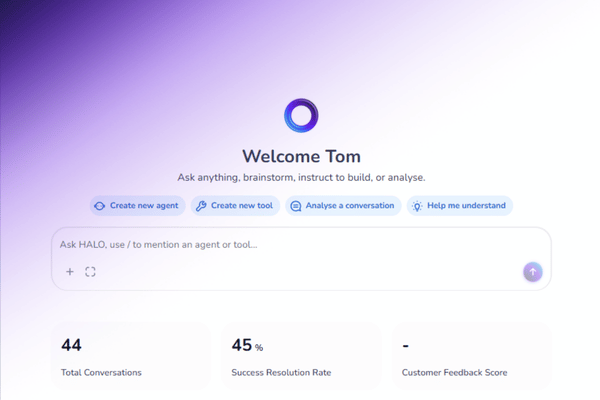
Our products leverage all three forms of AI in the areas where they add the most value. For instance, predictive AI plays a significant role in our marketing solutions (such as Marketing Cloud, Customer Data Platform, and AI Engine), while generative AI assists in content creation and improving communication (e.g., in our Service Cloud). Finally, agentic AI powers HALO, our agentic AI platform that allows you to easily build AI agents capable of making autonomous decisions and performing actions. By combining the strengths of generative, agentic, and predictive AI, we help organizations elevate their customer experience to the next level.


Was this article interesting?
Share it!

Latest Articles

blog-whatsapp-during-sales
Nov 06, 2025 • WhatsApp

Increase Conversion With Promotional Messages on WhatsApp

In an age of mass marketing with constant TV, internet and email advertising, it’s safe to say that peak sales periods like Black Friday and the Holiday Season can be an overwhelming experience for consumers around the world. When marketing messages don’t match consumers’ needs and interests, they disconnect. They mute notifications, skip ads, and avoid all forms of marketing until the peak season is over. As an eCommerce marketer, you should always be looking to avoid this by diversifying and personalizing your marketing strategy in a way that suits your customers needs and sensibilities.

AI-now and future
Oct 28, 2025 • HALO

The Business Impact of Agentic AI: now and in the future

Imagine customer inquiries being answered 24/7 without wait times, automatic updates on delayed orders, or fully digital shopping assistants guiding customers from browsing to purchase. These are just a few examples of what Agentic AI can achieve. In this article, CM.com’s Marketing Lead AI & SaaS, Sander Harryvan, and Product Marketer, Tom Faas, share their insights on where businesses currently stand in adopting Agentic AI, what the next phase looks like, and why Agentic AI will have a profound impact on the way we do business in the coming years.

halo-insurance
Oct 10, 2025 • AI

From Claims to Customer Questions: How AI Agents Help Insurers

The insurance industry is known for its complex processes and heavy administrative load. Fragmented communication, outdated systems, and complicated policy conditions mean that finding the right information or processing changes often takes far longer than it should. AI agents can change that. They answer questions, pull real-time data from internal systems, and seamlessly trigger processes.

blog-halo-real-estate
Oct 02, 2025 • AI

AI Agents in Real Estate: Streamline Inquiries and Deliver a Better Buyer Experience

In today’s competitive global real estate market, agencies are flooded with inquiries on listed properties. Buyers expect instant answers about availability, pricing, and next steps — often outside office hours. For real estate agents, this creates a heavy workload: handling repetitive questions, scheduling viewings, and informing disappointed buyers when a property is already sold or oversubscribed. Without automation and smart workflows, agencies risk being overwhelmed, leading to frustrated buyers and missed opportunities for meaningful interactions. HALO, CM.com’s AI-powered engagement platform, helps real estate companies streamline these processes. AI agents work 24/7, provide human-like responses, and handle routine tasks instantly. This frees agents to focus on what matters most: building relationships and guiding serious buyers through the transaction.

blog-ai-agents-live
Sep 23, 2025 • AI

How AI Agents Are About to Transform the Music and Events Industry

The live events industry - from sports matches to festivals and concerts - is under pressure. Fans demand more, technology evolves constantly, and internal teams are stretched thin. In this shifting landscape, AI agents aren't here to replace people, but to amplify them - bringing structure, speed, and clarity where it's needed most.

Implementation checklist for AI agents
Sep 23, 2025 • AI

Your AI Agent Implementation Checklist

AI agents aren’t just shaping the future they’re transforming how companies serve and connect with their customers right now. From answering service requests instantly, to guiding shoppers through a purchase, to spotting upsell opportunities in real time, the question is no longer if you should implement AI, but how quickly you can put it to work.

blog-picking-ai-platform
Sep 09, 2025 • HALO

From Selection to Success: How to Choose the Right AI Platform

An AI platform isn’t just another tool you purchase. It’s the foundation on which your organization operates and innovates. The choices you make today will shape how you work in the future. While you may start with just a few agents supporting specific use cases, over time more processes will be taken over by agents. That’s why it’s critical to ensure the foundation you lay now is cohesive, scalable, and backed by solid governance and compliance.

blog-halo-ecommerce
Sep 09, 2025 • AI

AI Agents: The Accelerators of Conversational Commerce

The way consumers search for and process information online is rapidly changing thanks to AI. Where we used to type in search terms, scroll through dozens of results, and manually filter them, we are now getting used to having conversations. With ChatGPT, Google’s AI features, and other assistants, answers come faster and are more relevant. That same way of interacting is now taking over e-commerce at high speed. For retailers, this is the moment to step in: the webshop as we know it—where customers have to actively search themselves—is giving way to personal conversations that directly lead to action.

Is this region a better fit for you?
Go
close icon