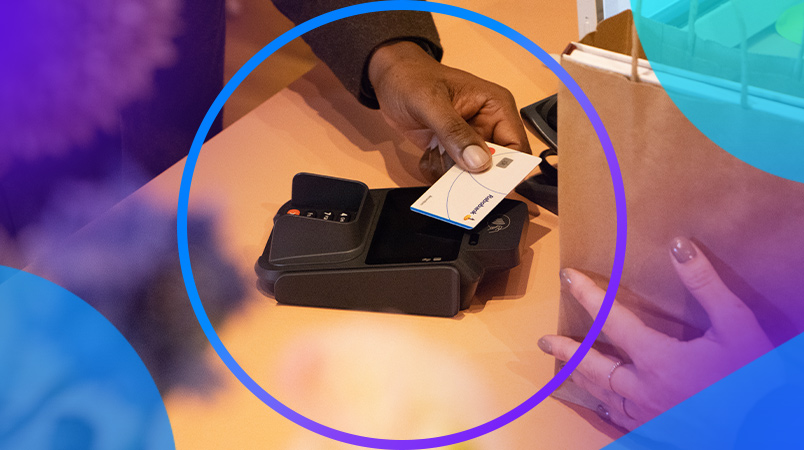


We all expect in-person payments to ‘just work’, instantly, every time. But connectivity issues, power disruptions, technical failures or even cyberattacks can interrupt transactions without warning. In high-volume sectors like retail, hospitality and events, even a short outage can result in lost revenue, long queues and damaged reputations. For essentials like groceries and medical supplies, continuity of payment provision can be critical.
Offline payments, enabling transactions to continue without connectivity, are therefore becoming an essential part of modern payment strategies, ensuring commerce doesn’t stop when connectivity does.

Continuity of Payment Means Continuity of Society
Potential disruption impacts everyone, from governments through to payment stakeholders and individual citizens. We all need to be prepared for potential disruption. In the Netherlands, for example, all citizens have been advised to prepare an emergency kit, including cash.
While individuals are taking responsibility, there is also a clear role for merchants and the payments ecosystem to play. As digital payments have become the norm, so too have instances where payments disruption has directly impacted access to goods or services. These scenarios highlight the importance of enhancing existing infrastructure and expertise to help ensure that everyone who wants to make or take payment can do so, during disruption or even a crisis.
The reasons extend beyond commercial motivators: fast, uninterrupted transactions in crowded or low-signal environments are essential safety measures; groceries are an essential repeat purchase for all; and continuity across diverse hospitality environments such as restaurants and events is vital to local economies.
What are Offline Payments?
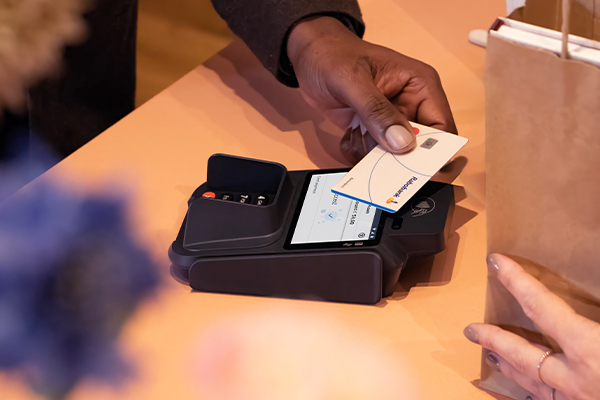
Payment terminals require an active and stable internet connection to process transactions. In some situations, internet connectivity may be temporarily unavailable or unstable, not allowing payments to be processed. ‘Offline Payments Mode’ is a feature that allows terminals to continue processing transactions during temporary connectivity interruptions, ensuring payment continuity.
Offline payments are often viewed as a fallback. In reality, they function as proactive continuity layer within modern payment strategies to protect revenue across in-person environments.
When connectivity drops, the point-of-sale (POS) terminal automatically switches to offline mode. This happens without manual intervention, reducing the risk of deliberate misuse by staff or customers, and allowing service to continue without disruption or added complexity. When a connection is reestablished, the terminal application automatically synchronizes all stored transactions.
Offline Payments Mode: How It Works and What It Means for Merchants
The key thing merchants want to understand is – what happens if some offline transactions get declined?
When connection to the terminal is restored and the backlog of transactions is forwarded for approval, it is possible that an issuer may decline a payment due to insufficient funds, for example. In this scenario, the payment cannot be reinitiated and the customer has already left with the goods.
However, the real risk isn’t declined transactions—it’s turning customers away.
During a loss of connectivity, merchants have a choice: accept offline payments where a small percentage may get declined; or accept no payments at all. In most scenarios, accepting the majority of transactions (offline), while anticipating and managing a small proportion of post-processing failures, is commercially preferable to halting all sales activity and closing off entire revenue streams.
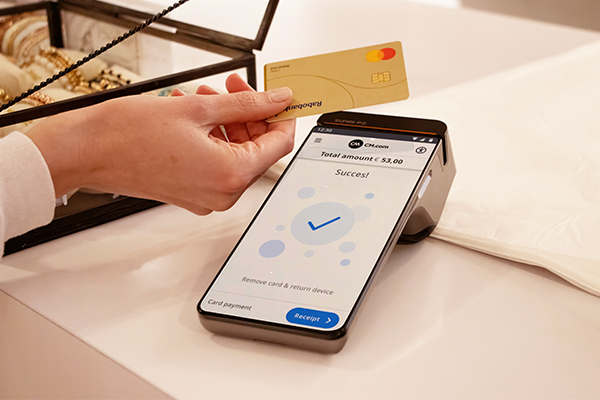
To support this, offline payments include built-in limits and controls to balance financial risk with operational continuity. Customers and staff are not aware that payments are being made offline, thanks to automatic switching, reducing the chance for deliberate misuse.
When terminals are automatically switched to offline mode, transaction details are securely stored on the device and queued for processing once connectivity returns (within a 24hr window). This means customers can continue purchasing, using risk controls implemented by CM.com, such as:
A maximum of 1,000 stored transactions per device
A €250 cap per offline transaction
A total stored value limit of €25,000 per device (lower limits can be decided by merchants if they so wish).
Offline Payments in Practice: Retail, Hospitality and Events
Offline payment capabilities are already proven in real-world environments where transaction speed and reliability are not just important, but essential. Large events such as the Dutch Grand Prix see thousands of simultaneous transactions made within hours, including in areas where network connectivity can fluctuate, exacerbated by demands on the underlying infrastructure.

Maintaining uninterrupted payments, despite these infrastructure challenges, was essential to protect the revenue and reputation of the organizers and commercial partners. By providing automatic switching capabilities, CM.com was able to prevent bottlenecks, support safe crowd control measures, and maintain payment flow during peak demand.
Major public gatherings – including for the Staatsloterij TeamNL House during the Winter Olympic Games in Milan, and Festival op de Ring, celebrating 750 years of Amsterdam culture, heritage and history – have already proven the value of integrating offline payments into core business continuity strategies.
Building Resilient Payment Systems with Offline Payments
Commerce today never sleeps. But the risk of outages is real, no matter their cause. Decision-makers in retail, hospitality, and events cannot afford to overlook these scenarios and must build resilience into their payment setup as standard. Building offline payment capabilities into the broader business strategy enables organizations to move beyond reactive contingency planning into a model where resilience and reliability are baked into every point of sale, ready for any scenario.