
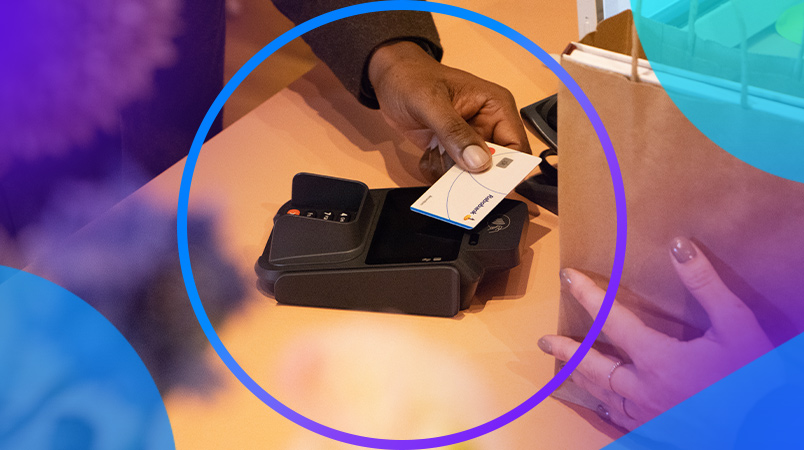
The Challenge of Customer Anonymity
Consumers are increasingly privacy-conscious and aware that their data has value. Consequently, only a small fraction sign up to loyalty programs and do so only for the retailers they trust and use regularly.
This is driving a decline in brand loyalty across the board. Research shows that US customer loyalty fell from 79% in 2022 to just 68% in 2023. When we pair this with the fact that loyal customers account for around 65% of retail revenue and spend 67% more per purchase than new customers, the market is becoming even more competitive.
While eCommerce retailers benefit from customer profiling and online tracking for almost every transaction, most customers remain anonymous for physical and omnichannel retailers.
If retailers can only see thousands of separate transactions in their systems, with little to link the data together, then there is very little insight to be gained. This makes it extremely difficult to track campaign success, spending windows, shopper frequency, lifetime values and more. And without these insights, stores are basing strategy and decisions on a data set that is representative of only a tiny proportion of their customer base.
Knowing Customers Better with Shopper Recognition
Retailers have a huge opportunity to make their anonymous payment data work harder. It’s a question of insight.
By using the payment data of its customers, retailers can turn their anonymous shoppers into known customers and extract valuable retail intelligence from this data as a result. The card number used by the customer is paired with a unique identifier and can then be linked to additional data such as transaction values and products purchased. It is then captured in the retailer’s database, which enables insights and analysis of consumer behaviors. These include:
Customer lifetime value
Store visit frequency
Whether shoppers visit multiple stores
What type of purchases are made in store and which products are often purchased together
Campaign success, e.g. an uptick in new shoppers following a marketing push
All of this, and more, can be achieved while the customers continue to remain anonymous. CM.com helps retailers to better understand the behavior of their anonymous shoppers. This is the core function of Shopper Recognition.
How It Works:
Every card number registered at a payment terminal or online store is paired with a unique identification number (also known as a token).
The token is anonymous and added to a secure database.
Details including transaction ID, order ID and order value are linked to the token.
Whenever the token-linked card, is used in-store and online, all transaction details and other information will be collected.
The data can then be analyzed to customer behaviors, product trends, store insights and much more.
Through this process, customer behavior on that card is now trackable and recognizable across multiple visits, outlets and purchases.
Smarter Strategies Through Shopper Insights
Successful retailers are defined by how well they can respond to customer needs.
When retailers can see beyond single purchases and begin recognizing patterns, the data can be used to make better decisions across the entire business. Businesses can discover who shops in-store and how frequently, which products are most commonly bought together, and how purchasing behaviors differ between online and offline channels. The result is a more complete, actionable view of the entire customer base.
With this greater level of insight, a retailer can implement better business, store, product and marketing strategies grounded in customer behaviors. In turn, for example, this can enable more targeted marketing promotions, and the prediction of future buying patterns with greater confidence.
An additional benefit of utilizing shopper recognition is that shoppers who are already part of the retailers’ loyalty program are instantly recognized, and loyalty rewards are applied automatically, building customer loyalty without requiring any additional action from the consumer.
What's Next: From Payment Data to Personalized Experiences
Shopper recognition can be a game changer for retail strategy. Here, we have discussed how merchants can turn their anonymous in-store shoppers into customer profiles, using payment data. But this is only part of the puzzle.
The insights generated can enhance loyalty programs, enable hyper-personalized promotions, and support end-to-end engagement strategies, ensuring consistency both online and in-store.
The potential impact is significant. According to McKinsey, personalization at scale can reduce acquisition costs by up to 50%, lift revenue 15%, and boost marketing ROI between 10-30%. Shopper Recognition isn’t only helping retailers understand customers better, it is also contributing to bottom line growth.
Future blogs in this series will dig into how Shopper Recognition is supercharging loyalty programs, enabling hyper-personalized promotions, and supporting end-to-end engagement strategies to grow revenues for retailers.
Learn more about how CM.com can help you unlock insights from your payment data.