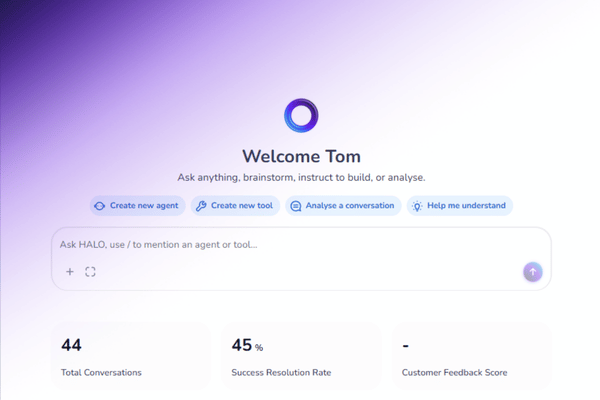


Are you interested in AI? Do you think that an AI agent might be useful to your business, and do you want to test this theory? Then don't just throw an AI agent onto a website without the right integrations and long term planning! While it might seem like a quick way to test the waters, it may actually give you a misguided view on agentic AI. If you start with a poorly integrated prototype, the results will probably be mediocre at best, and expanding to a full-fledged agentic AI workforce will become exponentially more difficult.
Think Beyond a Single AI Agent
Many businesses and developers begin their AI journey by deploying a single AI agent to handle a specific task, like answering customer inquiries, automating a repetitive task, or provide insights in data. This approach is similar to how (most) businesses adopt software tools - it starts with identifying an issue or a need, then there will be a search for software that helps solve it, and eventually a new tool from a (possibly) new vendor will be implemented and added to the list of software used within the business.

Here's the catch: AI doesn’t operate in a vacuum. When you inevitably scale from one agent to a network of agentic AI assistants, the foundation you lay today determines how seamless that transition will be.
Businesses use different software tools for every task. Don't make the same mistake with agentic AI.
Imagine you're a marketeer for a leading business, and you wish to send out a personalized multi-language campaign with upcoming new offers tailored to the recipients. Then you might have a whole dashboard of apps and tools at your service - an emailing tool to design and send the email, your CRM to grab personalized customer data, ChatGPT or similar AI tools to help gather data and do the translations, a spellcheck or grammar tool, and so on and so on. And even though these tools might complement each other, none of them truly work together as one system. This should and can be done better!
An agentic AI workforce isn’t just a collection of software tools or separate bots; it’s a carefully orchestrated system of AI components that communicate, learn, and execute tasks efficiently. If your first AI agent isn’t designed with this future ecosystem in mind, you’ll find yourself facing integration complications, disconnected or fragmented data, and other headaches that could have been avoided.
It would be a shame if your smart and capable AI agent is not equipped with the right tools to do the job correctly. Without the proper input or access to data and tools, the AI agent will have to try and perform under unnecessary limitations - and that just won't work very well.
Future-Proof Your AI Agents
The important question is: How do you ensure your AI setup is scalable and efficient from the start? Here are some tips!
1. Integrate AI Seamlessly
What is needed to make your AI agents successful? It's integration, integration, integration! Because without a proper, seamless integration into your (marketing, service, and communication channels) software, your AI agent will just not perform to its full potential. And a lack of integration early on can lead to bottlenecks as you scale up your AI agent workforce.
2. Guide AI Based on Data
Where does your AI agent look for its information? What actions is it allowed to take (based on that information)? How does it reason? How does it think and act?
A new AI agent is only as smart as the data you feed it. Make sure you equip your AI agent with existing information, data and documents to get its knowledge up to speed. After that, it can start learning. Monitor and analyze performance data to keep control of the agent, and to guide its learning behavior. It's key to know what your AI agent is doing and will potentially do based on behavior patterns, but it's also important to be able to backtrack. Did the AI agents display some unwanted behavior? Track it back and fix it. A vital metric for this is feedback. Consumers and employees alike should be able to express opinions on the workings of your AI agents, so you can adjust the AI agent accordingly. This is how your AI agents will learn and improve over time.
3. Govern Access to AI Applications
When it comes to governance, there are two separate things to take into account? Firstly, who can access and edit your AI agents? And secondly, where should humans intervene in the AI flow?
Managing who can and cannot access or edit your AI agents is always good practice. It makes it easier to maintain a consistent strategy, it helps prevent unauthorized changes to your agent, and it is protects sensitive data. This is especially important when you're scaling up your AI workforce, because more AI agents means more room for errors and risks.
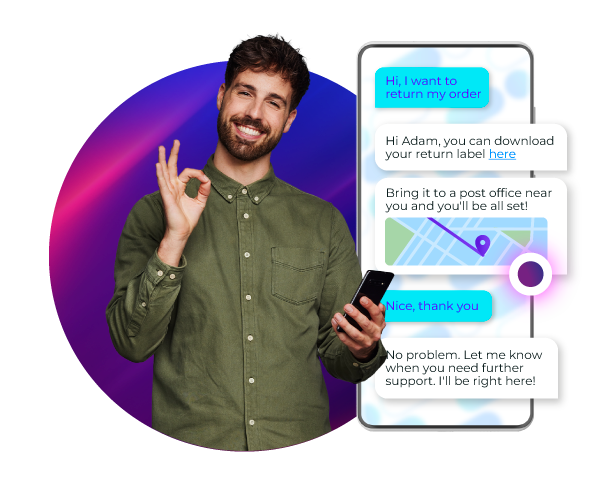
Deciding when governance is needed within the agentic AI flow is essential for the customer experience. No matter how smart or nuanced AI agents can be, some sensitive topics or situations require a human touch - either to confirm verification or authorization, or to fully hand-over a task or conversation to be handled offline.
4. Ensure Compliance
You'll be sharing a lot of data with these AI systems, so make sure your agentic AI prover is compliant with the data security and privacy regulations, both internationally and locally. A good AI provider is not only GDPR and ISO compliant, but will also actively strive to stay ahead of the game by continuously implementing or improving their security and safety measures.
From Single Agent to AI Workforce With CM.com
Building a future-proof AI system may take a little more effort upfront, but the payoff is worth it. By focusing on integration, scalability, monitoring, and compliance, you’re not just deploying an AI agent—you’re laying the groundwork for an entire AI-driven workforce.
So, before you launch your first AI agent, think ahead. Are you setting yourself up for success, or are you creating barriers to future growth? The difference between a simple chatbot and an efficient AI workforce lies in the planning - and a good agentic AI prover can be an important asset.
CM.com offers the Agentic AI solution HALO as an integrated solution with existing customer engagement software - everything you need for your AI endeavors from one and the same provider, seamlessly integrated and compliant. Start smart, and your AI ecosystem will grow with you, not against you.